
Major Infrastructure Projects Reshaping Central Florida — What Buyers & Investors Should Watch
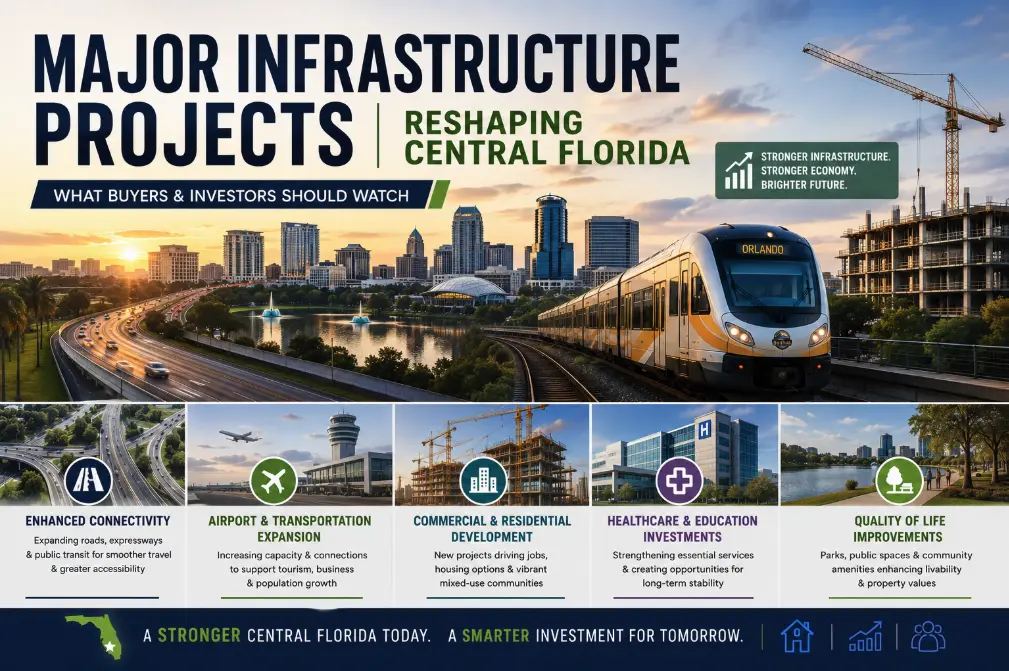
Central Florida is in the middle of one of the most significant transformation cycles in its history. What’s happening today goes far beyond residential construction or isolated commercial growth — it is a region-wide infrastructure shift that is actively reshaping where people live, work, and invest.
For buyers and investors, infrastructure is not just background development. It is one of the strongest predictors of future property value, rental demand, and long-term appreciation.
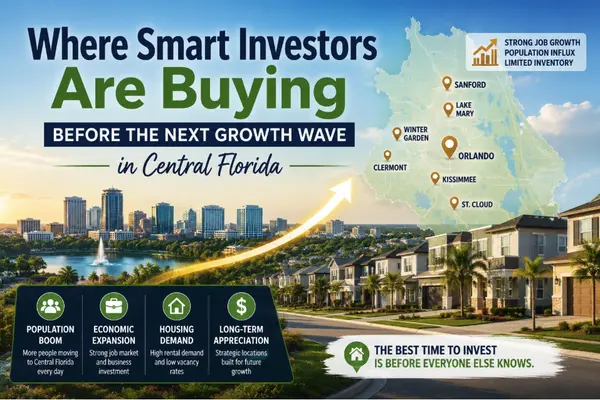
Across the region — from Orlando to surrounding growth corridors like Winter Garden, Clermont, Kissimmee, and beyond — major infrastructure projects are laying the foundation for the next decade of real estate growth.
Understanding these projects early is what separates reactive buyers from strategic investors.
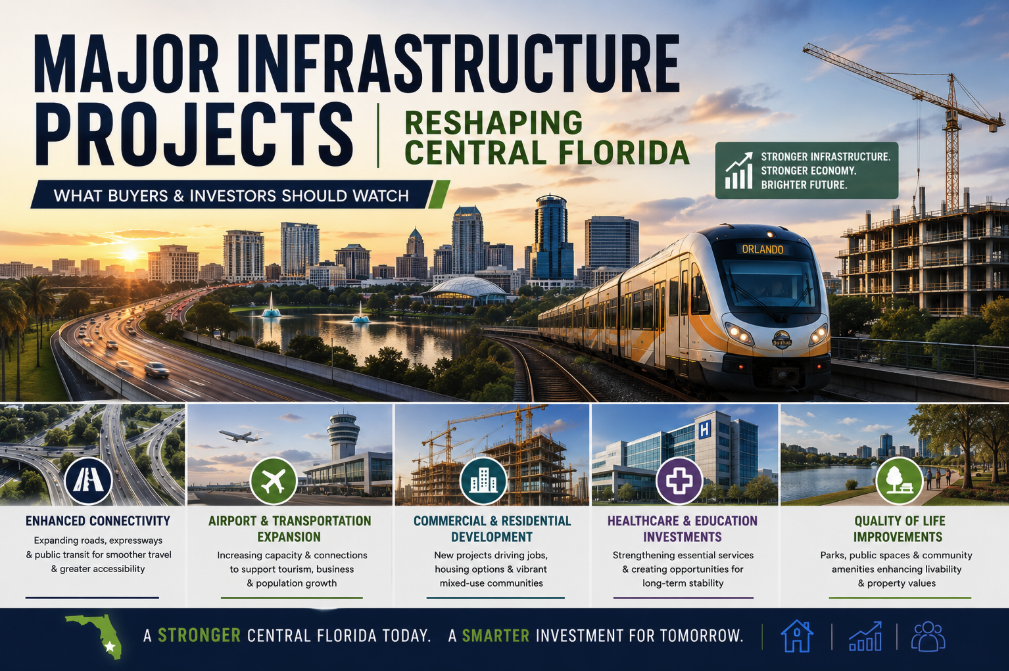
Why Infrastructure Matters So Much in Real Estate
Before diving into specific projects, it’s important to understand why infrastructure has such a powerful effect on real estate markets.
Infrastructure determines:
- How easily people can commute
- Where jobs and businesses concentrate
- Which areas become desirable for families
- How quickly new communities expand
- Where future demand is created
In simple terms:
👉 Infrastructure creates access. Access creates demand. Demand creates appreciation.
When roads expand, transit improves, and commercial hubs develop, real estate values around those improvements tend to rise — sometimes significantly.
Central Florida is currently experiencing multiple overlapping infrastructure expansions, meaning the impact is not isolated — it is regional and compounding.
1. Highway Expansions and Regional Connectivity Improvements
One of the most impactful infrastructure trends in Central Florida is the continued expansion and improvement of major highway systems.
Key corridors being improved include:
- I-4 (major east-west spine through Orlando)
- SR-417 (Central Florida Greeneway)
- SR-429 (Western Beltway expansion corridor)
- US-27 and US-192 (growth arteries into Polk and Lake County regions)
Why This Matters for Real Estate
Highway improvements:
- Reduce commute times
- Expand the “livable radius” around job centers
- Open up previously undervalued land for development
- Increase accessibility to suburban communities
For example, areas once considered “too far” from Orlando’s job centers are now viable residential markets because of improved highway access.
This is one of the reasons why suburban growth in places like Clermont and Kissimmee continues to accelerate.
2. Transit-Oriented Development and Mobility Expansion
While Central Florida is still largely car-dependent, the region is steadily investing in improved mobility systems and transit-linked development zones.
These include:
- Enhanced commuter rail expansion planning
- Improved bus rapid transit corridors
- Station-area redevelopment zones
- Pedestrian-focused downtown redesigns
Transit-oriented development (TOD) focuses on building higher-density housing, retail, and office space around mobility hubs.
Why Investors Should Pay Attention
TOD zones typically:
- Increase land value near stations
- Attract higher-density residential projects
- Support long-term rental demand
- Encourage walkability and mixed-use living
These developments tend to outperform surrounding areas over time because they combine convenience + accessibility + density, all of which are key drivers of demand.
3. Downtown Orlando Urban Core Transformation
Downtown Orlando is undergoing a steady evolution into a more modern, mixed-use urban core.
Key initiatives include:
- Streetscape redesign and pedestrian improvements
- Expansion of public green spaces
- Mixed-use residential and commercial towers
- Increased entertainment and dining districts
- Infrastructure upgrades supporting higher density living
The goal is to transform downtown into a 24/7 live-work-play environment, rather than a traditional 9-to-5 business district.
Real Estate Impact
Urban redevelopment typically leads to:
- Increased rental demand from young professionals
- Rising property values in adjacent neighborhoods
- Stronger demand for condo and multifamily housing
- Spillover growth into nearby transitional areas
Neighborhoods near downtown often see early appreciation as redevelopment expands outward.
4. Airport and Logistics Expansion: Economic Engine Growth
Central Florida’s economy is heavily supported by tourism, logistics, and aviation infrastructure.
Major expansion efforts include:
- Airport capacity improvements
- Cargo and freight infrastructure expansion
- Warehouse and distribution hub growth
- Supporting road networks for freight movement
These projects are particularly important because logistics growth brings:
- Stable, long-term employment
- Increased workforce housing demand
- Steady rental absorption
Investor Insight
Areas near logistics hubs often become workforce housing hotspots, where rental demand remains strong even during broader market slowdowns.
This is especially relevant for investors targeting long-term, stable cash flow properties.
5. Master-Planned Community Infrastructure Buildout
One of the most visible infrastructure trends in Central Florida is the rise of master-planned communities, which are essentially “cities within cities.”
These developments include:
- Internal road networks
- Schools and educational facilities
- Retail centers and grocery anchors
- Medical and wellness infrastructure
- Parks, trails, and recreation systems
Instead of development happening organically, entire communities are being built with infrastructure planned from day one.
Why This Matters
Master-planned communities:
- Create immediate housing demand
- Support long-term price stability
- Attract families and long-term tenants
- Reduce vacancy risk for landlords
They are especially common in growth corridors around Orlando’s outskirts, including western Orange County and parts of Lake and Polk counties.
6. Tourism Infrastructure Expansion and Economic Spillover
Central Florida remains one of the most powerful tourism-driven economies in the world, and ongoing infrastructure expansion in this sector continues to shape real estate demand.
This includes:
- Theme park expansions
- New hotel and resort development
- Transportation improvements near tourism hubs
- Retail and entertainment district growth
Tourism infrastructure doesn’t just affect visitors — it affects:
- Hospitality employment
- Service industry housing demand
- Short-term rental performance
- Mid-term corporate housing needs
Example Impact Areas
Communities like Kissimmee and Davenport continue to benefit from proximity to major tourism corridors, which support both rental income and property appreciation.
7. Education, Medical, and Innovation Corridors
Another major infrastructure driver is the expansion of education and healthcare hubs, particularly in innovation-focused zones.
These areas typically include:
- Medical city developments
- Research campuses
- University expansion zones
- Technology and innovation districts
One of the most notable examples is the continued expansion of Lake Nona’s medical and innovation district, which has become a model for integrated urban planning.
Why This Matters
These corridors attract:
- High-income professionals
- Long-term renters
- Relocation buyers
- Steady housing demand
They also tend to support resilient property values, even during market fluctuations.
What Buyers & Investors Should Watch Closely
If you’re actively investing or planning to buy in Central Florida, here are the key signals to monitor:
📍 1. Road Expansion Announcements
Follow where highways and major roads are being widened or extended.
📍 2. New Commercial Permits
Retail, logistics, and office developments signal job creation.
📍 3. Master-Planned Community Releases
These often indicate future population growth corridors.
📍 4. Transit and Mobility Investments
Areas near transit improvements often experience early appreciation.
📍 5. School and Hospital Expansion Plans
These are long-term indicators of family-driven housing demand.
Final Thoughts: Infrastructure is the Real Estate Blueprint
Central Florida is not growing randomly — it is being deliberately reshaped by infrastructure investment.
From highways and transit systems to master-planned communities and urban redevelopment, each project contributes to a larger pattern:
👉 Where infrastructure goes, growth follows.
Where growth follows, real estate values rise.
For buyers and investors, the opportunity is not just to participate in today’s market — but to position ahead of tomorrow’s growth.
The smartest decisions in real estate are rarely about what is already visible. They are about what is currently being built in the background.
Categories
Recent Posts





ARE YOU LOOKIING TO SELL YOUR HOME FOR TOP DOLLAR? CLICK THE BUTTON BELOW TO GET STARTED
SELL YOUR HOME