
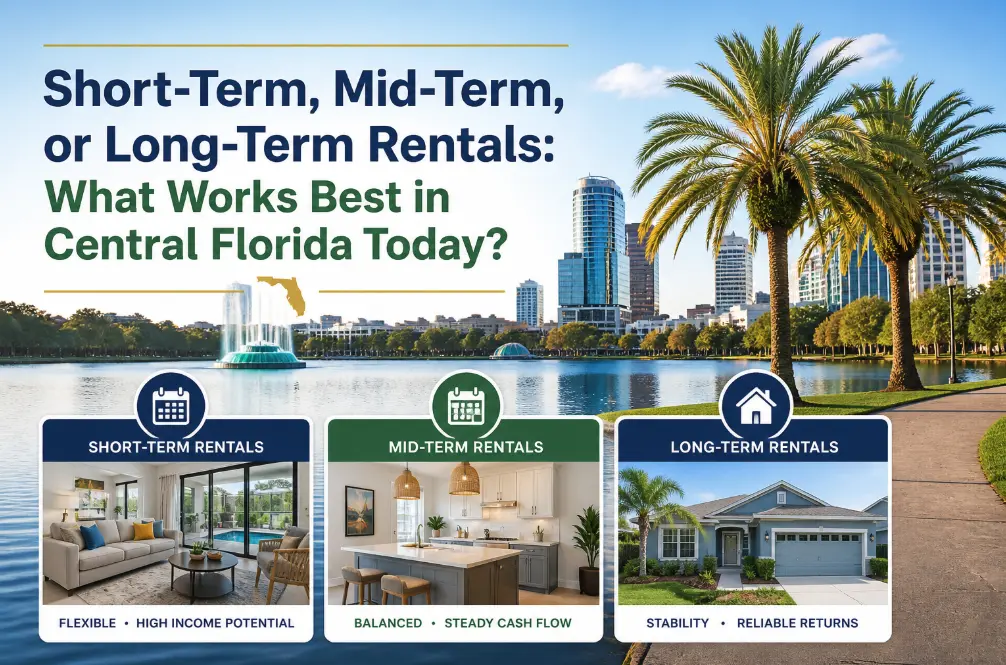
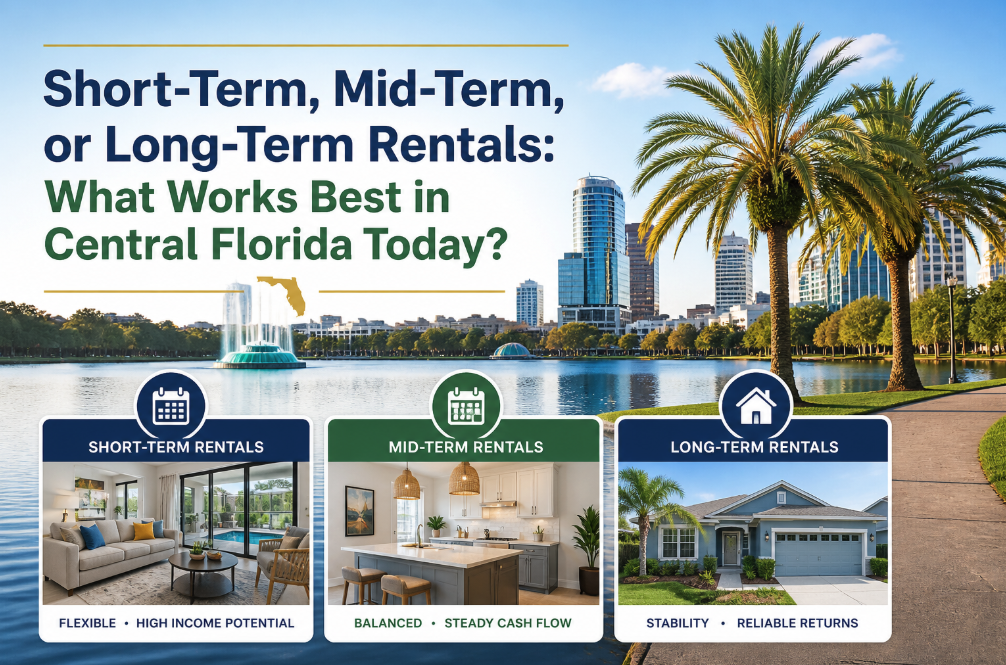
Short-Term, Mid-Term, or Long-Term Rentals: What Works Best in Central Florida Today?
The Central Florida rental market has transformed dramatically over the past decade. Fueled by population growth, tourism demand, remote work trends, and broader economic shifts, rental investors increasingly face an important question:
👉 Which rental strategy delivers the best returns in 2026—short-term, mid-term, or long-term rentals?
The answer isn’t one-size-fits-all. Each strategy has distinct advantages, risks, and ideal use cases — and the best choice depends on your investment goals, property type, and tolerance for active management.
In this guide, we’ll break down the three major rental strategies and explore what’s working best in Central Florida right now, including examples and key local considerations.
📌 Why Central Florida Is Unique for Rental Investors
Before comparing rental types, it’s important to understand what makes this region special:
- World-class tourism draws millions annually
- Population growth is driving local housing demand
- Remote work trends are boosting relocation buyers and extended stays
- Diverse job hubs attract professionals year-round
- Some areas have zoning and HOA restrictions that impact rental use
These forces make Central Florida one of the most dynamic rental markets in the country — but they also mean you need a targeted rental strategy for success.
🏡 Long-Term Rentals: The “Classic” Strategy
What It Is
Leasing a property for 12 months or more to tenants who pay monthly rent, often renewable annually.
Why It’s Popular
- Stable income with predictable monthly rent
- Lower management intensity compared to short-term
- Fewer gaps between tenants
- Professional tenants often sign annual leases
What Works in Central Florida
Long-term rentals are still the backbone of many portfolios — especially for:
- Single-family homes in family-oriented suburbs
- Townhomes and condos near employment hubs
- Properties near colleges (for faculty/staff tenants)
Example
A 3-bedroom home in Clermont rented long-term might generate around $2,200–$2,800/month (depending on condition and amenities). With reliable occupancy, that’s steady cash flow without the fluctuations of nightly seasonal demand.
Pros
✔ Predictable cash flow
✔ Lower turnover and vacancy risk
✔ Lower marketing and operational overhead
Cons
✘ Rents generally lower than short-term peaks
✘ Limited flexibility for personal use
✘ Longer commitment to tenants
🛏 Short-Term Rentals: Airbnb, VRBO, and Vacation Demand
What It Is
Renting the property on a nightly or weekly basis — popular with tourists, vacationers, and short stays.
Why It’s Attractive in Central Florida
Central Florida is synonymous with tourism:
- Theme parks (Disney, Universal)
- Beaches and outdoor recreation
- Convention traffic
- Seasonal visitors and snowbirds
This consistent demand has supported strong short-term rental performance for years — but it’s more complex in 2026.
Current Trends
Short-term rentals still outperform long-term in gross nightly revenue, but net profitability increasingly depends on:
- Occupancy rates
- Seasonal demand
- Local regulations
- HOA rules
- Tax compliance (tourist development tax)
Cities and homeowner associations have also tightened short-term rules in many communities, so not all properties are eligible.
Example
A 4-bedroom home in Kissimmee can earn strong nightly rates near theme parks, yet an HOA restriction or county ordinance might limit rentals under 7 nights — changing the revenue math significantly.
Pros
✔ Higher income potential in peak seasons
✔ Flexibility for personal use
✔ Can yield rent premiums on weekends/holidays
Cons
✘ Operational intensive (cleaning, check-ins)
✘ Seasonal occupancy cycles
✘ Regulatory and HOA limitations
✘ Higher utilities and turnover costs
🕒 Mid-Term Rentals: The “Best of Both Worlds”
What It Is
Renting properties for 30–90 days or monthly deals — ideal for:
- Relocating professionals
- Temporary assignments
- Snowbirds / seasonal visitors
- Extended travel guests
Mid-term rentals have surged in popularity because they:
- Avoid some short-term regulatory restrictions
- Deliver longer stays than nightly rentals
- Attract tenants who pay utilities and treat the home like a residence
Why It’s Trending
As remote work increases and relocation patterns shift, more people need flexible stays that aren’t tied to nightly bookings — but also aren’t committed to 12-month leases.
Example
A 3-bedroom home near Orlando or Lake Nona might:
- Rent well for mid-term professionals
- Sit idle less than short-term rentals between guests
- Work without HOA interference that prohibits nightly terms
Pros
✔ Higher monthly income than typical long-term rents
✔ Less intensive than nightly management
✔ Shorter vacancy gaps than traditional rentals
Cons
✘ Still requires more management than long-term
✘ Can experience seasonality
📊 How the Strategies Compare
| Strategy | Typical Rent Level | Management Intensity | Best Use Case |
|---|---|---|---|
| Long-Term | Moderate Stable | Low | Families, Workforce Tenants |
| Mid-Term | Moderate–High | Medium | Relocators, Remote Workers |
| Short-Term | High (Seasonal) | High | Tourists, Vacation Demand |
🧠 Key Factors to Choose the Right Strategy
📍 1. Location
Central Florida isn’t uniform. Some areas draw short-term tourists — others appeal to long-term renters:
- Theme park proximity: Short-term / Mid-term
- Employment hubs & suburban schools: Long-term
- Transit access & lifestyle: All strategies can work
🛠 2. Property Type
- Single-family homes often excel in long- and mid-term markets
- Vacation-oriented homes excel in short-term markets
- Condos and townhomes may be limited by HOA rules
📆 3. Management Preference
Do you want hands-on or hands-off?
- Hands-off: Long-term
- Hands-on: Short-term
- Balanced: Mid-term
🔍 4. Regulations and Compliance
Central Florida municipalities and HOAs vary widely in rental rules:
- Some allow nightly rentals
- Others require minimum stays
- Some prohibit short stays altogether
Before investing, verify your property’s allowable use with local ordinances and HOA guidelines.
📈 What’s Working Best in Central Florida Right Now
🌴 Short-Term Rentals
Perform very well:
- Near theme parks (Kissimmee/Davenport)
- Near beaches and conventions
Best suited for investors who want revenue spikes and are comfortable with active operations.
🕒 Mid-Term Rentals
Rising in popularity among:
- Snowbirds (seasonal residents)
- Remote professionals
- Medical & tech relocators
This strategy is gaining traction across Orlando metro and areas like Lake Nona, College Park, and near universities.
🏠 Long-Term Rentals
Remain the most predictable and stable income source, especially in:
- Clermont
- Winter Garden
- South Orlando
- Suburbs with family demographics
Many investors average stronger long-term ROIs when balancing rent stability with lower turnover costs.
💡 Real Tips Before You Commit
✔ Know Your Local Rules
Don’t assume your property can be used nightly — always check city & HOA regs first.
✔ Understand Operating Costs
Short and mid-term rentals often include utilities, cleaning, and marketing — factor these into net returns.
✔ Target Property Types Wisely
Match the rental type with the buyer/renter base:
- Families → Long-term
- Seasonal workers → Mid-term
- Tourists → Short-term
✔ Partner With a Local Expert
A knowledgeable agent or property manager can help you:
- Price competitively
- Market effectively
- Stay compliant with local requirements
🏁 Final Thoughts
Central Florida’s rental market is robust, diverse, and full of opportunity — but success depends on choosing the right strategy.
Here’s a quick takeaway:
✔ Short-term rentals can deliver high seasonal returns — if allowed and well managed.
✔ Mid-term rentals are an emerging sweet spot for steady income with less turnover.
✔ Long-term rentals offer consistent, predictable cash flow with minimal disruptions.
The best strategy for you depends on your goals, property type, and how much time you want to invest in managing it.
If you’re trying to decide which rental strategy fits your property and financial goals, I can help you create a tailored investment plan that considers:
- Local rental data
- Expected income vs expenses
- Regulatory environment
- Your personal preferences
Just let me know and we’ll walk through it together.
Categories
Recent Posts





ARE YOU LOOKIING TO SELL YOUR HOME FOR TOP DOLLAR? CLICK THE BUTTON BELOW TO GET STARTED
SELL YOUR HOME