
Top Florida Markets for Section 8 Investing This Year
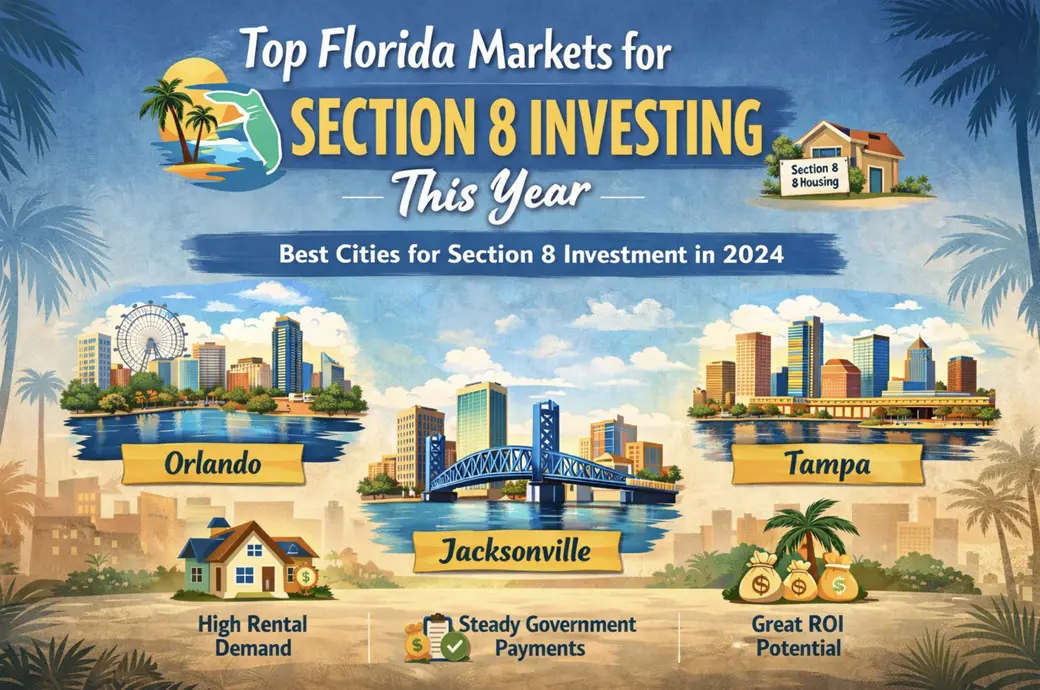
Section 8 investing has emerged as one of the most reliable strategies for real estate investors seeking stable cash flow and long-term tenant reliability. With government-backed rent payments and high demand for affordable housing, Section 8 rentals provide an attractive alternative to market-rate rentals — especially in markets where acquisition costs remain reasonable but HUD rent standards are competitive.
Florida continues to be a hotspot for Section 8 investing due to its strong population growth, job opportunities, and rising rental demand. But not all markets are created equal. This year, several Florida cities and regions stand out as particularly favorable for investors focused on cash flow and long-term stability.
In this article, we’ll break down:
- Key factors that make a strong Section 8 market
- The top Florida markets for Section 8 investing in 2026
- Real-life examples and cash-flow analysis
- Tips for investors entering these markets
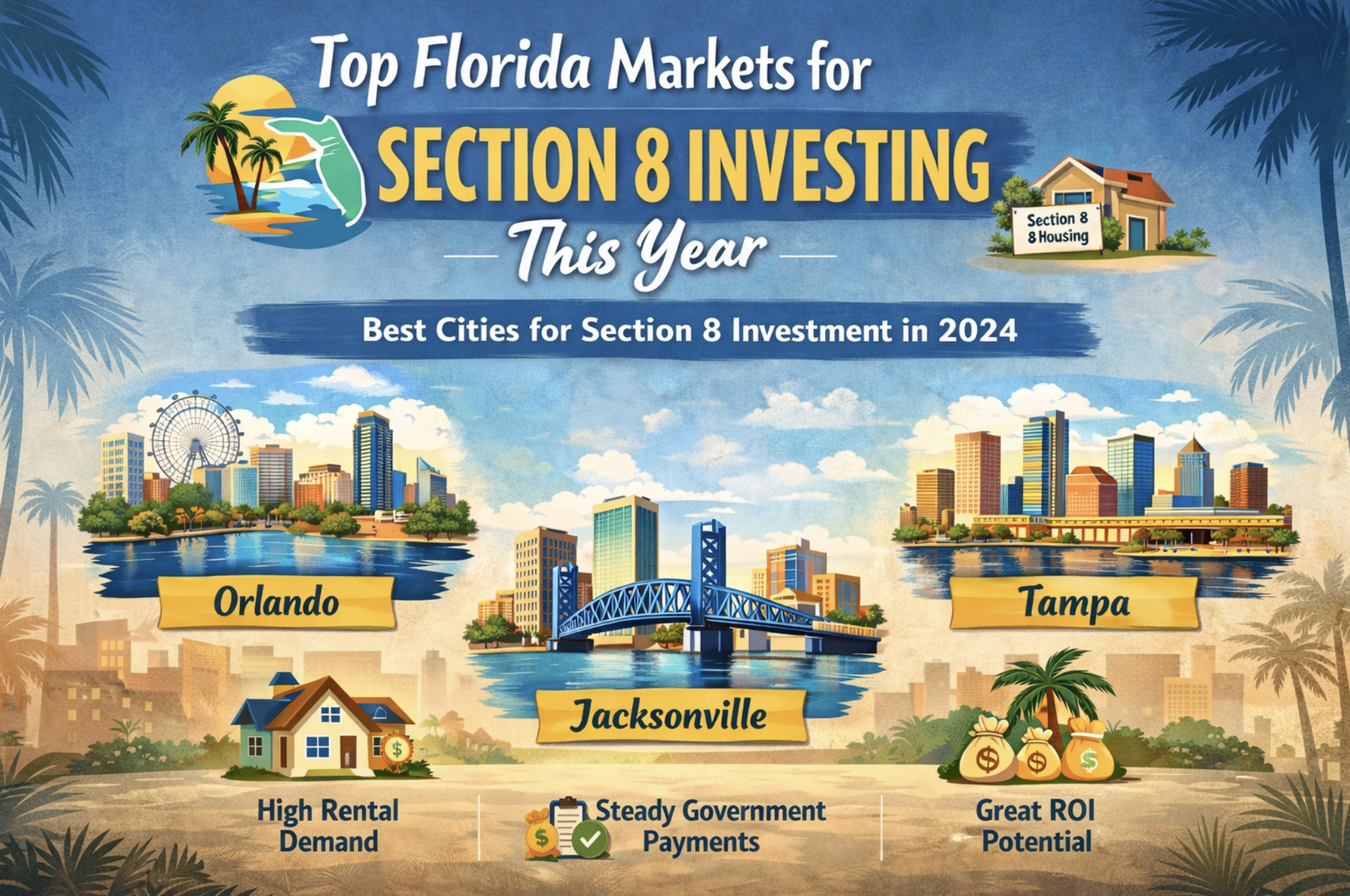
Why Florida is Attractive for Section 8 Investors
Florida’s housing and rental markets are influenced by unique factors that make Section 8 investing especially appealing:
- Population Growth
Florida’s population has grown rapidly over the past decade, fueled by migration from other states, retirees, and workers relocating for jobs. Areas outside major metros, particularly secondary cities and suburban corridors, are seeing rising demand for affordable rental housing. - Housing Affordability Gaps
With median home prices rising in Orlando, Tampa, and Miami, many households qualify for housing vouchers. This increases tenant demand for Section 8 rentals, providing a stable occupancy base. - HUD Payment Standards
Florida’s Section 8 vouchers often allow for competitive rent rates even in smaller markets, meaning investors can capture cash flow comparable to — or better than — market rents without the volatility of traditional rentals. - Landlord-Friendly Policies
Many secondary and tertiary markets in Florida maintain landlord-friendly regulations, making compliance and management more straightforward than in heavily regulated urban cores.
Key Metrics for Section 8 Market Selection
When evaluating Section 8 investment opportunities, consider the following metrics:
- Fair Market Rent (FMR) vs. median home price
- Voucher utilization rates (high utilization = stable demand)
- Population and job growth trends
- Turnover and vacancy history
- Ease of inspections and local housing authority efficiency
Markets that excel in these areas often deliver high cash-on-cash returns and low vacancy risk.
Top Florida Markets for Section 8 Investing in 2026
1. Lakeland
Why it’s attractive:
- Located between Tampa and Orlando, Lakeland benefits from both metro employment corridors.
- Logistics, warehouse, and manufacturing jobs fuel demand for affordable housing.
- Median home prices remain under $250,000, while Section 8 rents reach $1,900–$2,100 for 3-bedroom homes.
Investor Tip: Focus on established neighborhoods with lower turnover, and consider homes that pass Section 8 inspections with minimal upgrades.
2. Ocala
Market highlights:
- Affordable single-family homes and growing employment in healthcare and distribution sectors.
- Strong Section 8 utilization with long waitlists.
- Rent-to-price ratios provide positive cash flow potential even for smaller investment portfolios.
Example: A 3-bedroom property purchased for ~$180,000 can generate $1,800–$2,000 in monthly Section 8 rent.
3. Deltona
Why investors like it:
- Lower home prices compared to nearby Orlando.
- High Section 8 demand from families and service-industry workers.
- Limited new affordable housing construction ensures sustained rental demand.
Tip: Multi-bedroom homes often yield the highest cash flow under Section 8 in Deltona.
4. Kissimmee
Market strengths:
- Proximity to Orlando’s tourism and service economy.
- High voucher utilization and competitive HUD rents.
- Large family-sized homes are in strong demand.
Investor Insight: Section 8 rents for 4-bedroom homes in Kissimmee often match or exceed market rents, making it a highly cash-flow-friendly market.
5. Haines City
Why it works:
- Affordable acquisition costs and newer construction that easily meets HUD inspection standards.
- Population growth fueled by spillover from Polk County and Orlando.
- Strong Section 8 tenant retention rates.
Pro Tip: Target newer subdivisions for easier compliance and lower maintenance costs.
6. Tampa (Secondary neighborhoods)
While central Tampa can be competitive, several neighborhoods outside downtown remain emerging Section 8 markets.
Highlights:
- Strong employment sectors: healthcare, logistics, and education.
- HUD rents support single-family cash flow without the high metro acquisition costs.
- Redevelopment and transit projects improve long-term appreciation potential
7. Jacksonville (Suburban options)
Jacksonville’s outer suburbs provide opportunities for Section 8 investors seeking high cash flow with lower entry costs.
Key factors:
- Rapid population and job growth in suburban corridors.
- Affordable single-family homes with competitive Section 8 rents.
- Stable demand from service, military, and logistics workers.
Tips for Success in Florida Section 8 Investing
- Partner with Experienced Property Managers
Managing Section 8 tenants requires compliance with inspections and HUD rules. Partnering with local property managers familiar with Section 8 reduces stress and vacancy risk. - Focus on Multi-Bedroom Properties
Many Section 8 vouchers target families, so 3–4 bedroom homes often deliver higher rental income than smaller units. - Research Local Housing Authorities
Efficiency, inspection turnaround, and voucher distribution vary by county. Understanding local processes can accelerate your rental income. - Analyze Cash Flow Metrics Carefully
Consider mortgage, taxes, insurance, and management fees to calculate true net cash flow before purchase.
Final Thoughts
For cash-flow-oriented investors, Section 8 investing in Florida offers predictable income, long-term tenant stability, and strong growth potential. Markets outside major city cores — including Lakeland, Ocala, Deltona, Kissimmee, and Haines City — provide some of the best opportunities due to low acquisition costs, strong HUD rents, and growing population and employment trends.
Section 8 investing isn’t just about picking properties; it’s about understanding local demand, HUD guidelines, and neighborhood dynamics. By focusing on the right markets, investors can build portfolios that deliver reliable monthly income while participating in Florida’s long-term growth story.
Categories
Recent Posts





ARE YOU LOOKIING TO SELL YOUR HOME FOR TOP DOLLAR? CLICK THE BUTTON BELOW TO GET STARTED
SELL YOUR HOME