
The Psychology of Buyers in a Changing Market

Real estate markets don’t just shift because of numbers. They shift because of people.
Behind every interest rate headline, inventory chart, or price adjustment is a buyer making an emotional decision—sometimes confidently, sometimes cautiously, and often somewhere in between. In today’s changing housing market, understanding buyer psychology is just as important as understanding market data.
Because while the market may be cooling in some areas and stabilizing in others, buyers are not disappearing. They’re simply thinking differently.
Let’s break down how buyer psychology has evolved—and what it means for anyone navigating the market right now.

Buyers Are No Longer Rushing—They’re Reassessing
During the peak frenzy of recent years, buyers were driven by urgency. Homes sold in days. Offers were written with limited due diligence. Many buyers felt that hesitation meant missing out forever.
That psychology has shifted.
Today’s buyers are more deliberate. They’re taking time to:
- Compare multiple properties
- Ask tougher questions
- Revisit budgets and priorities
- Walk away if something doesn’t feel right
This doesn’t mean buyers are fearful—it means they’re regaining control.
In a market where inventory has improved and bidding wars are less common, buyers feel empowered to pause and evaluate. That pause is psychological relief after years of pressure.
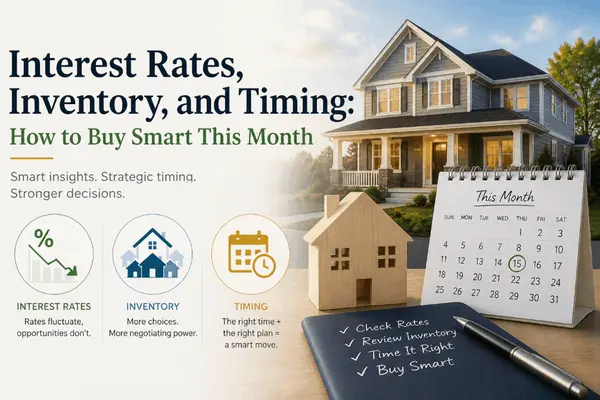
Interest Rates Changed the Emotional Equation
Interest rates aren’t just a financial factor—they’re a psychological one.
Even buyers who can comfortably afford a home are thinking differently about monthly payments. Higher rates have created:
- Heightened awareness of long-term costs
- Increased sensitivity to pricing
- A stronger desire to “get it right” the first time
Instead of asking, “How fast can I win this home?” buyers are now asking:
- “Is this home worth the payment?”
- “Will I regret this in five years?”
- “What’s the opportunity cost of waiting?”
This internal dialogue slows decision-making—but it also creates more intentional buyers.
Buyers Are Seeking Certainty in an Uncertain Market
When markets feel unpredictable, people crave stability.
Today’s buyers are gravitating toward:
- Move-in ready homes
- Well-maintained properties
- Neighborhoods with strong fundamentals
- Homes that feel like a “safe choice,” not a gamble
This explains why properties that are priced correctly and presented well still sell quickly, while others sit longer.
Buyers aren’t avoiding homes—they’re avoiding risk.
Emotional Fatigue Is Very Real
Many buyers today aren’t new to the process. They’ve:
- Lost bidding wars in previous years
- Paused searches due to rate hikes
- Re-entered the market after waiting
That experience creates emotional fatigue.
Fatigued buyers may:
- Hesitate longer before submitting offers
- Need reassurance and clarity
- Feel anxious about making the “wrong” decision
Understanding this emotional state is crucial. Buyers aren’t just buying a home—they’re trying to avoid regret.
Lifestyle Is Driving Decisions More Than Ever
Another major psychological shift: buyers are prioritizing how they want to live, not just what they can afford.
Today’s buyers care deeply about:
- Work-from-home flexibility
- Commute times (or lack of them)
- Space for family, hobbies, or multigenerational living
- Access to amenities, schools, and community
This lifestyle-first mindset often outweighs pure investment logic. Buyers are willing to compromise on size or location if a home better supports their daily life.
Buyers Are More Educated—and More Skeptical
Access to information has changed buyer behavior dramatically.
Most buyers now:
- Track market trends online
- Compare price histories
- Research neighborhoods extensively
- Question pricing more openly
While this education empowers buyers, it also creates skepticism. Buyers are less likely to accept:
- Overpricing without justification
- Vague explanations
- “This won’t last” pressure tactics
Transparency builds trust. And trust is essential in a market where buyers feel cautious.
The Fear Has Shifted—from Missing Out to Overpaying
In past years, buyers feared missing out.
Today, they fear overpaying.
That psychological shift affects everything:
- Offer strategies
- Negotiation expectations
- Willingness to wait
Buyers are no longer asking, “What if prices keep rising without me?”
They’re asking, “What if I buy now and values soften?”
This doesn’t mean buyers expect a crash—it means they’re weighing outcomes more carefully.
Confidence Comes from Clarity, Not Speed
In today’s market, confident buyers aren’t the fastest—they’re the most informed.
When buyers feel:
- Educated about pricing
- Comfortable with financing
- Clear on their long-term goals
They act decisively—sometimes faster than expected.
But confidence doesn’t come from urgency anymore. It comes from understanding.
What This Means for Sellers
For sellers, understanding buyer psychology is critical.
Today’s buyers respond best to:
- Accurate pricing
- Strong presentation
- Clear value propositions
- Honest communication
Homes that feel overpriced or uncertain trigger hesitation. Homes that feel fair and well-positioned feel safe.
In a psychological market, perception matters as much as reality.
What This Means for Investors
Investors should pay close attention to buyer behavior as well.
Shifting psychology reveals:
- Where demand is strengthening
- What types of homes feel “recession-resistant”
- Which areas buyers perceive as stable long-term
Understanding buyer emotion helps investors anticipate future demand—not just current numbers.
The Market Is Changing—but Buyers Are Still Human
At its core, real estate is emotional.
Even in a data-driven environment, buyers are still motivated by:
- Security
- Stability
- Pride of ownership
- Hope for the future
A changing market doesn’t eliminate those emotions—it amplifies them.
The buyers who succeed today aren’t fearless. They’re thoughtful. And the professionals who succeed alongside them are the ones who understand that psychology drives every decision.
Final Thought
The market may shift again. Rates may change. Inventory may rise or fall.
But buyer psychology will always tell the real story.
Those who learn to listen to it—rather than fight it—will be best positioned to navigate whatever comes next.
Categories
Recent Posts






ARE YOU LOOKIING TO SELL YOUR HOME FOR TOP DOLLAR? CLICK THE BUTTON BELOW TO GET STARTED
SELL YOUR HOME