
Why Job Growth in Central Florida Is Driving Housing Demand in 2026
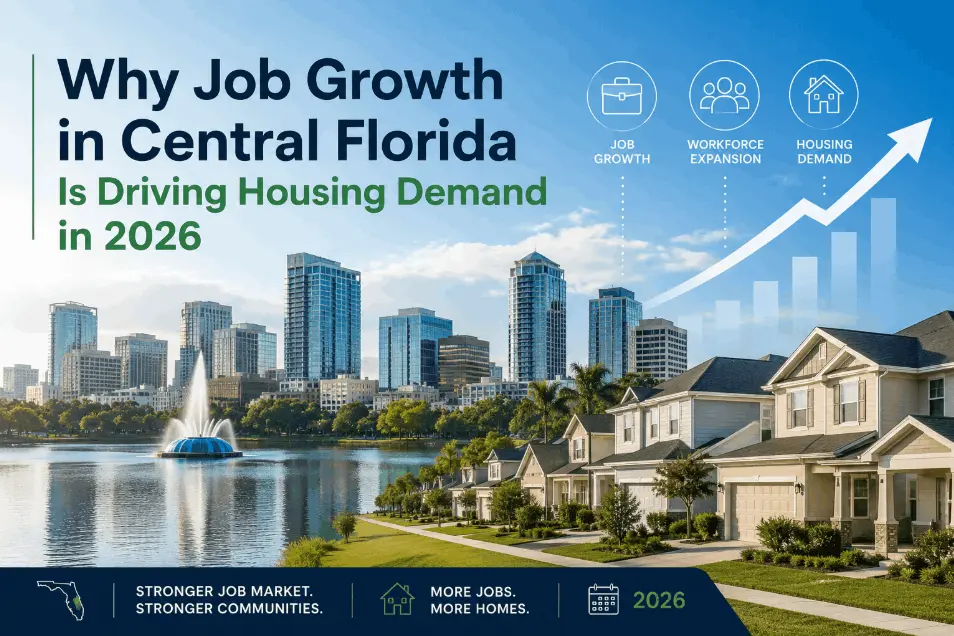
One of the strongest forces shaping the real estate market in Central Florida right now isn’t just interest rates, inventory, or even migration trends — it’s job growth.
Across the region, employment expansion is quietly doing what it has always done in real estate cycles: pulling people into the market, increasing household formation, and fueling housing demand at every price point.
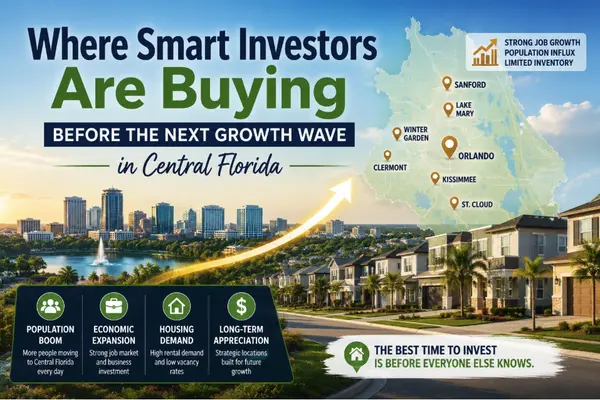
In 2026, this effect is especially visible in and around Orlando, as well as surrounding high-growth suburban markets like Winter Garden, Clermont, Kissimmee, and broader Central Florida corridors.
This blog breaks down why job growth matters so much, which industries are driving it, and how it translates directly into real estate demand, pricing pressure, and investment opportunity.
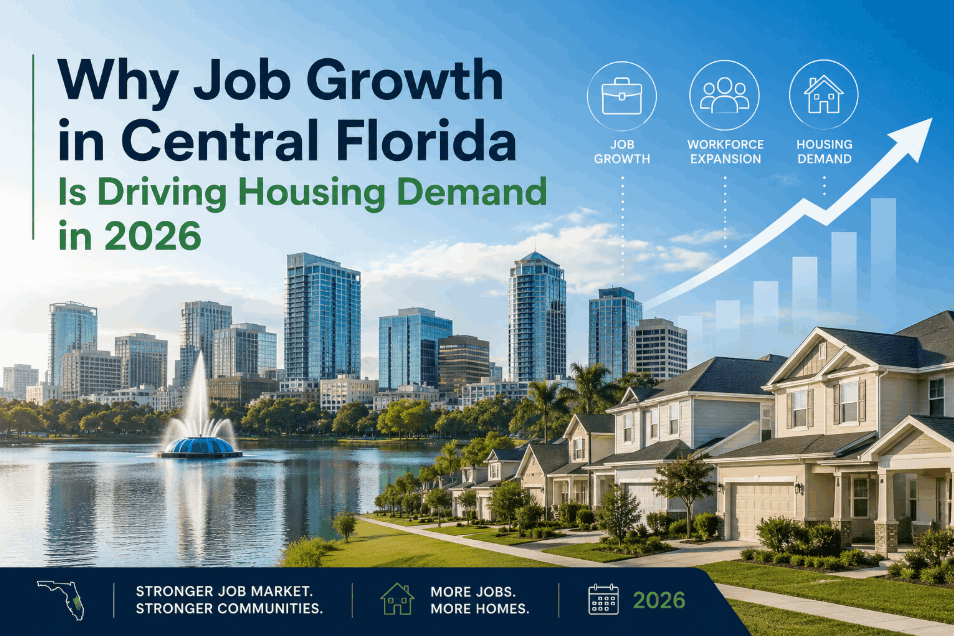
The Core Relationship: Jobs Create Housing Demand
Real estate fundamentals are simple at their core:
👉 People move where jobs are.
👉 Jobs create income.
👉 Income creates housing demand.
When employment increases in a region, three things happen almost immediately:
- More people relocate for work
- Existing residents form new households (buying or renting)
- Competition for housing increases
This is why job growth is often considered one of the strongest leading indicators of long-term real estate appreciation.
In Central Florida, this relationship is particularly powerful because job growth is not concentrated in just one industry — it is happening across tourism, healthcare, logistics, construction, tech, and professional services.
Central Florida’s Expanding Job Engine
Central Florida’s economy is no longer dependent on tourism alone. While tourism remains a major driver, the region has diversified significantly.
Key Growth Sectors:
- Healthcare and medical innovation
- Logistics and warehousing
- Technology and simulation industries
- Construction and development
- Education and research institutions
- Hospitality and entertainment
This diversification matters because it creates a more stable and continuous demand for housing, rather than a seasonal or single-industry cycle.
For example, areas like the Lake Nona innovation district have helped establish Orlando as a growing hub for medical research and tech-driven employment, attracting professionals from across the country.
1. Population Growth Follows Employment Growth
Job growth and population growth are deeply connected. When companies expand or relocate into Central Florida, they bring:
- Employees relocating from other states
- New graduates entering the workforce
- Supporting service workers
- Business owners and contractors
This leads to steady population inflow, which directly increases demand for housing.
In markets like Orlando and surrounding suburbs, this often results in:
- Increased rental occupancy rates
- Faster home absorption (homes selling quicker)
- Rising competition among buyers
Even modest job growth can significantly impact housing demand when compounded over time.
2. Rental Demand Is Strengthening Across All Segments
As job opportunities expand, not every worker immediately becomes a homeowner. Many initially rent while:
- Relocating
- Saving for a down payment
- Testing different neighborhoods
- Adjusting to cost of living
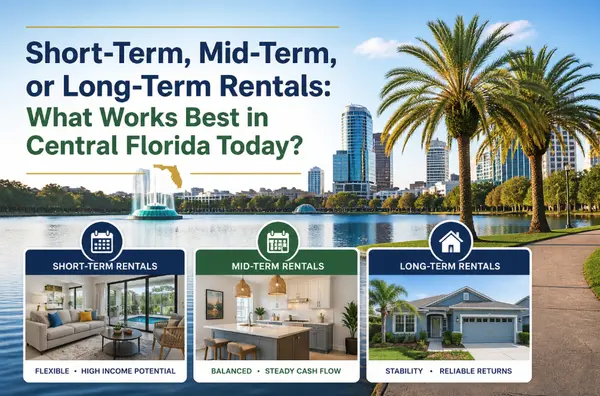
This creates strong demand across multiple rental types:
🏠 Long-term rentals
Workforce housing near job centers remains highly occupied, especially in suburban areas.
🕒 Mid-term rentals
Professional relocations, traveling workers, and contract employees increase demand for 30–90 day housing.
🏡 Short-term rentals
Tourism and project-based workers continue to support demand in select areas.
This is why investors are increasingly focusing on rental properties in Central Florida — job growth is creating multi-layered rental demand, not just one category.
3. Suburban Markets Benefit the Most
One of the most important patterns in 2026 is that job growth is pushing housing demand outward from Orlando’s core.
As employment centers expand or become decentralized, workers are choosing to live in surrounding suburbs where they can get:
- More space
- Better affordability
- New construction options
- Family-friendly communities
This is fueling strong demand in areas like:
- Winter Garden — lifestyle-driven suburban growth
- Clermont — affordability + commuter access
- Kissimmee — tourism + workforce housing
- Davenport and surrounding Polk County corridors — expansion spillover markets
These areas often become the first wave of housing absorption when job markets expand.
4. Wage Growth Supports Higher Home Prices
Another important factor is not just the number of jobs — but the quality and wage level of those jobs.
As Central Florida attracts:
- Healthcare professionals
- Tech workers
- Engineers
- Remote corporate employees
- Logistics managers
…the average income base rises.
Higher wages lead to:
- Increased home-buying power
- Ability to qualify for larger mortgages
- Higher rental affordability thresholds
- Stronger competition for housing stock
This helps push home prices upward over time, especially in areas with limited inventory.
5. Housing Supply Is Not Keeping Up
Even as construction activity continues, supply often lags behind demand.
Reasons include:
- Construction delays
- Rising material and labor costs
- Zoning and permitting constraints
- Limited land in desirable corridors
This imbalance between job-driven demand and constrained supply is one of the main reasons Central Florida continues to experience upward pressure on housing prices.
In simple terms:
👉 More jobs + not enough housing = rising home values and rents
6. Why Investors Are Paying Close Attention
From an investor perspective, job growth is one of the clearest signals for long-term opportunity.
Smart investors look for areas where:
- New employers are entering the market
- Infrastructure supports commuting
- Population inflows are increasing
- Rental demand is tightening
These conditions often create strong environments for:
- Cash-flow rental properties
- Long-term appreciation
- Low vacancy rates
- Tenant stability
In Central Florida, job-driven growth corridors are becoming some of the most competitive investment zones.
7. The Ripple Effect: From Jobs to Neighborhood Transformation
Job growth doesn’t just affect housing demand — it transforms entire communities.
Here’s how the ripple effect typically works:
- A new employer or industry expands
- Workers relocate to the area
- Housing demand increases nearby
- Developers build new housing and retail
- Infrastructure improves (roads, schools, services)
- Property values rise across surrounding neighborhoods
Over time, this leads to full neighborhood transformation, especially in suburban and previously underdeveloped areas.
8. What Buyers Should Do in a Job-Driven Market
If you’re buying in a strong job growth environment like Central Florida, strategy matters.
Key tips:
✔ Focus on commute-friendly locations near employment hubs
✔ Consider suburban markets with spillover demand
✔ Look for neighborhoods with future infrastructure investment
✔ Understand rental demand even if you plan to live in the home
✔ Move decisively when you find the right property
In job-driven markets, hesitation can sometimes mean missing out on the best opportunities.
9. What Investors Should Watch in 2026
For investors specifically, job growth should be tracked alongside:
- New corporate relocations
- Hospital and healthcare expansions
- Logistics and warehouse development
- Tech and innovation district growth
- Wage increases across sectors
These indicators often signal where housing demand will rise next, not just where it already exists.
Final Thoughts: Jobs Are the Engine Behind the Market
While headlines often focus on interest rates or short-term price movements, the real long-term driver of Central Florida’s housing market is simple:
👉 Jobs create demand. Demand creates housing pressure. Housing pressure creates opportunity.
As Central Florida continues to diversify its economy and attract both companies and talent, housing demand will remain strong — not just in Orlando, but across its expanding suburban and regional markets.
For buyers, this means understanding where employment growth is heading helps you choose smarter locations.
For investors, it means positioning ahead of demand instead of reacting to it.
Either way, job growth is not just an economic statistic — it is one of the most powerful forces shaping real estate decisions in 2026.
Categories
Recent Posts





ARE YOU LOOKIING TO SELL YOUR HOME FOR TOP DOLLAR? CLICK THE BUTTON BELOW TO GET STARTED
SELL YOUR HOME