
Why More Buyers Are Choosing Suburban Areas Outside Orlando
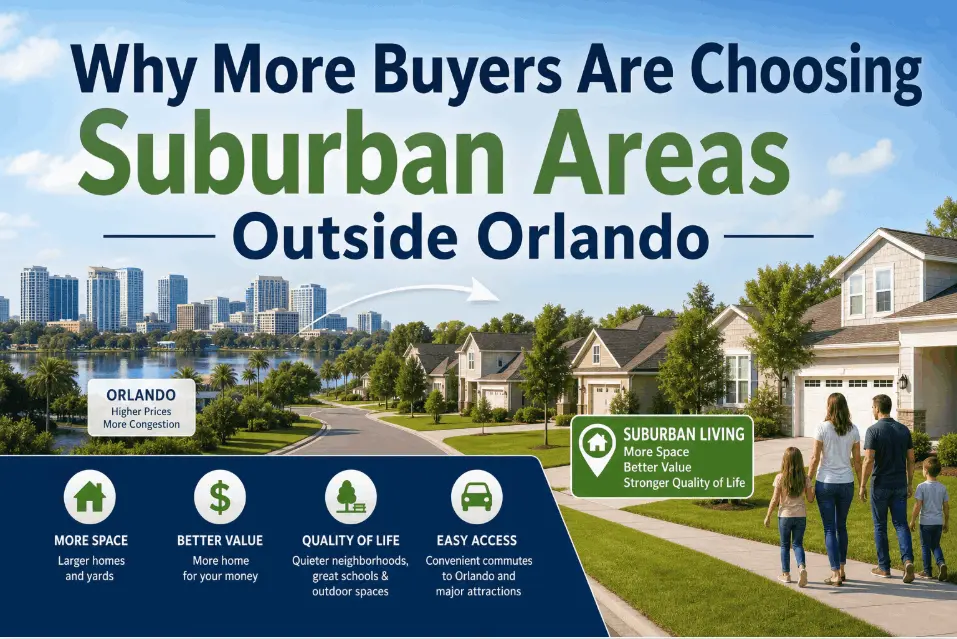
In recent years, there’s been a noticeable shift in where homebuyers are choosing to live. While Orlando remains one of Central Florida’s most dynamic housing markets, an increasing number of buyers are opting for suburban communities just outside the city — places like Winter Garden, Clermont, Kissimmee, Davenport, and beyond.
This trend isn’t random. It’s rooted in evolving buyer priorities, lifestyle preferences, and economic realities. Whether you’re a first-time homebuyer, a growing family, or an investor, understanding why suburban living is gaining traction can help you make smarter decisions in today’s market.
Let’s explore the driving forces behind this shift — and what it means for Central Florida real estate.
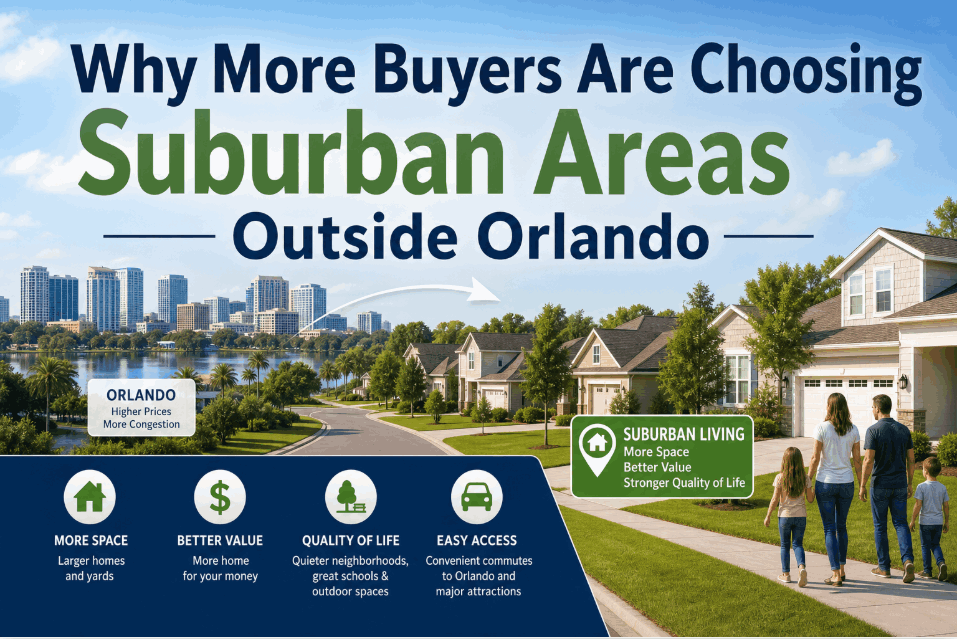
1. A Search for More Space (Indoors and Out)
One of the strongest trends driving buyers to the suburbs is the desire for more physical space — both inside the home and on the property.
🏡 Bigger Homes at a Better Price
In Orlando’s urban core, buyers often find themselves:
- Competing for smaller homes
- Paying high prices per square foot
- Sacrificing bedrooms or outdoor space
By contrast, suburban areas typically offer:
- Larger floor plans
- Bigger yards and outdoor areas
- Better value for money
Example:
A four-bedroom home with a fenced backyard may sell for well over $600K in Orlando’s desirable ZIP codes — but a similar or larger home in Winter Garden or Clermont may fall comfortably in the $400K–$550K range.
For buyers prioritizing space — especially families — this difference is significant.
2. Lifestyle Amenities Without the Urban Price Tag
Suburban living isn’t just about square footage — it’s also about lifestyle amenities that support everyday life.
Many suburban communities offer:
- Community parks and playgrounds
- Walking and biking trails
- Clubhouses, pools, and social spaces
- Proximity to lakes and recreational areas
- Family-friendly events and activities
These amenities appeal especially to:
- Growing families
- Empty nesters seeking peace and community
- Remote workers craving room for home offices and outdoor time
In places like Clermont, parks, trails, and scenic lakes combine with affordable housing — creating an appealing blend of natural beauty + everyday convenience.
3. Excellent Schools and Family-Focused Neighborhoods
For families, schools often top the list of reasons to choose a home.
Many suburban areas outside Orlando are served by highly rated school districts — and often without the high property taxes and HOA restrictions that can accompany urban-city living.
Why This Matters
Parents often see suburban homes as investments in their children’s education and future stability. A strong school district can:
- Boost resale value
- Reduce turnover
- Attract longtime residents
4. Commuter-Friendly Locations
Advances in transportation and flexible work arrangements have made it more feasible to live farther from a city center.
What Buyers Are Prioritizing:
✔ Shorter highways and expressway access
✔ Reasonable commute times to work hubs
✔ Proximity to job centers without inner-city congestion
✔ Options for remote or hybrid scheduling
In communities like:
- Kissimmee (close to major employers and tourism hubs)
- Davenport (easy access to I-4 and SR 27)
- Clermont and Winter Garden (commuter access plus quality neighborhoods)
…buyers are choosing suburbia without sacrificing connectivity.
5. Affordability That Still Delivers Quality
While Orlando remains a strong market, prices often reflect urban demand, which makes affordability a growing challenge — especially for first-time buyers or budget-conscious investors.
Suburban areas typically offer:
- Lower entry prices
- Larger homes at similar price points
- Lower monthly mortgage burdens
- Better options for multi-generational living
This “value per dollar” factor is a major reason buyers are shifting their focus outward.
6. Remote Work Has Redefined Priorities
One of the biggest long-term impacts of the pandemic was remote work. Even as office culture evolves, many companies now support weeks of remote or hybrid schedules — and buyers are responding accordingly.
What This Means:
- Less emphasis on living close to the office
- More focus on lifestyle, space, and community
- Higher value placed on home offices, privacy, and dedicated indoor areas
Suburban homes are often better suited for home offices, flexible workspaces, and quiet environments — a must for many buyers today.
7. Community and Social Connection
Suburban neighborhoods often foster a sense of community that urban living sometimes lacks. Things like:
- Block events
- Neighborhood clubs
- Shared amenities
- Family-centered programming
…create a social fabric buyers value, especially those looking for long-term roots, stability, or a sense of belonging.
Such environments have become increasingly attractive in a world where work-life balance matters more than ever.
8. Greater Variety of Housing Options
Suburban markets offer a wider range of housing styles and price points, including:
- Single-family homes
- Townhomes and attached units
- New construction communities
- Master-planned developments
- Age-restricted communities
Investors and homebuyers alike appreciate having options — especially when it comes to matching budget, lifestyle, and long-term goals.
9. Investment Potential: Strong Rental Demand
From an investor’s perspective, suburbs are no longer “secondary” markets — they are demand hubs.
Why? Because:
- Many families rent before buying
- Workforce housing demand is strong near job centers
- Rental pricing in suburbs often delivers higher cash flow
- Section 8 and longer-term rental demand is consistent
Communities like Kissimmee, Davenport, and Haines City are becoming hotspots for investors seeking yield with stability — especially for 3–4 bedroom rentals that attract families.
10. Predictable Appreciation and Long-Term Value
Real estate is ultimately a long-term game. In most suburban markets outside Orlando, buyers are discovering:
- Slower but steady appreciation
- Strong resale demand
- Predictable neighborhood growth
- Investments tied to schools, amenities, and quality of life
These factors help buffer local markets against volatility — a major benefit for buyers focused on wealth building.
What This Means for Sellers and Investors
If buyers are moving outward, what does that mean for those selling or investing?
📌 For Sellers
Homes in desirable suburban neighborhoods sell well — especially when they:
- Offer move-in-ready condition
- Feature family-friendly layouts
- Come with community amenities
- Are priced competitively
📌 For Investors
Suburbs offer:
- Strong rental demand
- Lower acquisition costs than urban cores
- Better long-term tenant retention
- Increasing appeal as buyers seek space and affordability
Final Thoughts: Suburbs Are Not “Secondary” — They’re Strategic
Central Florida’s growth is not slowing — it’s redistributing. Buyers are redefining what value means, and suburbs are delivering in ways that urban cores often cannot: space, community, quality of life, affordability, and connection.
Whether you’re a first-time buyer, a family looking for more room, or an investor focused on predictable returns, it’s worth paying attention to suburban areas outside Orlando as some of the strongest performing segments of the market today.
If you’d like personalized insights for a specific suburb — current pricing, rental demand, or investment potential — I can provide custom market breakdowns based on your interests. Just let me know where you want the next deep dive 👌
Categories
Recent Posts





ARE YOU LOOKIING TO SELL YOUR HOME FOR TOP DOLLAR? CLICK THE BUTTON BELOW TO GET STARTED
SELL YOUR HOME