
Section 8 Investing in Emerging Markets Outside Major Cities
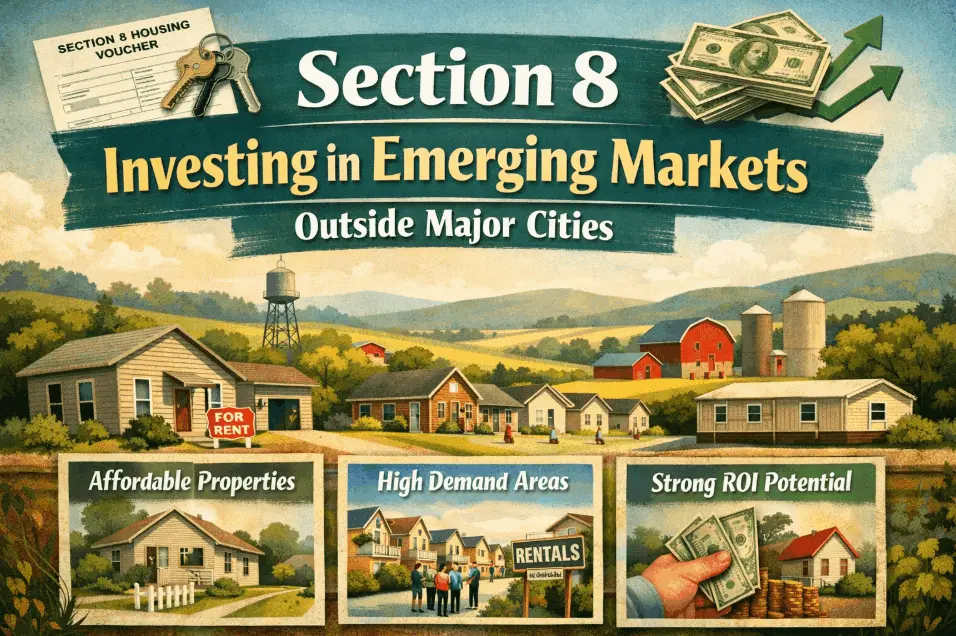
As housing affordability continues to challenge renters across the U.S., Section 8 investing has become an increasingly attractive strategy for real estate investors seeking stable cash flow, lower vacancy, and government-backed rent payments. While many investors focus on major metro areas like New York, Los Angeles, or Miami, some of the best Section 8 opportunities are actually found in emerging markets outside major cities.
These secondary and tertiary markets often offer lower acquisition costs, strong tenant demand, and competitive HUD payment standards, making them ideal for long-term buy-and-hold investors.
In this article, we’ll explore why emerging markets are well-suited for Section 8 investing, what metrics to evaluate, and specific markets—especially in and around Central Florida—that investors should be watching as we move into 2026.
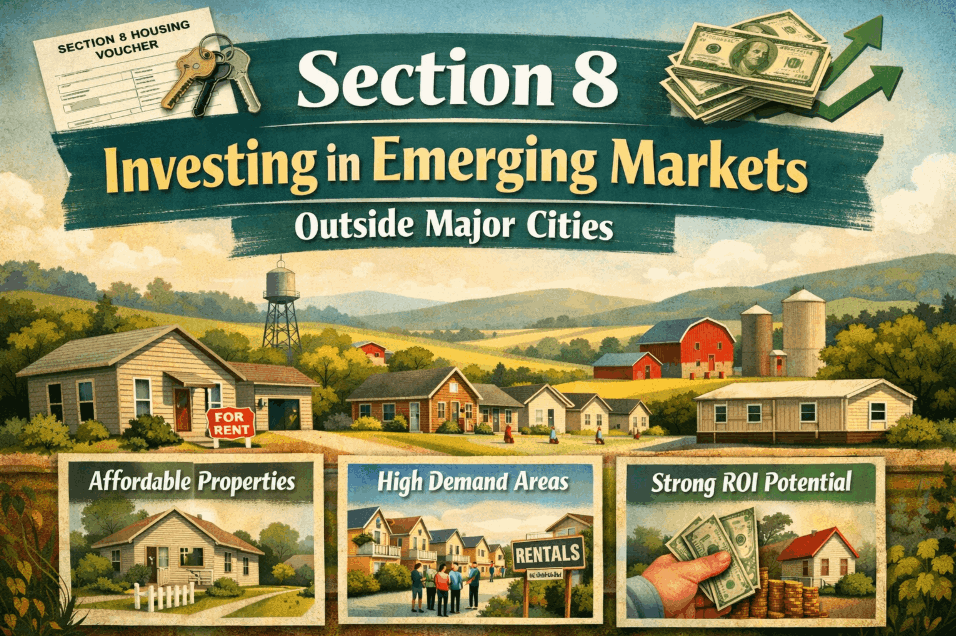
Why Section 8 Performs Well in Emerging Markets
Section 8 (Housing Choice Voucher Program) tenants typically stay longer, creating lower turnover and reduced vacancy risk. In emerging markets, this benefit is amplified due to:
1. Lower Home Prices, Strong Rent Coverage
Smaller cities often have home prices 30–60% lower than major metros, while Section 8 payment standards remain competitive.
For example:
- A home purchased for $180,000 in an emerging market may qualify for $1,700–$2,000 in monthly Section 8 rent
- That same rent level in a major city could require a $400,000+ purchase price
2. High Demand for Affordable Housing
Emerging markets often experience:
- Population growth
- Influx of service, logistics, healthcare, and manufacturing jobs
- Limited new affordable housing construction
This creates long waitlists for vouchers, ensuring consistent tenant demand.
3. Reduced Regulatory Pressure
Unlike large cities with strict rent controls or complex landlord regulations, many emerging markets maintain landlord-friendly policies, making compliance simpler.
Key Metrics to Evaluate for Section 8 Markets
Before choosing a market, investors should evaluate:
- HUD Fair Market Rents (FMRs) and local payment standards
- Median home price vs. Section 8 rent ratios
- Voucher utilization rates
- Population and job growth trends
- Local housing authority efficiency
Markets that score well across these factors often outperform major metros in cash flow and stability.
Emerging Section 8 Markets Investors Are Targeting
Lakeland
Located between Tampa and Orlando, Lakeland has become a logistics and distribution hub.
Why it works for Section 8:
- Median home prices remain significantly lower than Orlando
- Strong demand from warehouse and manufacturing workers
- Polk County Housing Authority consistently utilizes vouchers
Investor Insight:
Single-family homes in established neighborhoods often pass Section 8 inspections easily, and tenants tend to stay long-term.
Kissimmee
While close to Orlando, Kissimmee operates as its own emerging market.
Key advantages:
- High concentration of service-industry workers
- Strong HUD rent standards due to proximity to tourism employment
- High demand for 3–4 bedroom homes
Example:
A 4-bedroom home renting for $2,300–$2,600 under Section 8 may have been acquired for under $300,000 just a few years ago.
Deltona
Located in Volusia County, Deltona is benefiting from spillover growth from both Orlando and Daytona Beach.
Why investors are watching Deltona:
- Lower price point than Orange County
- Strong voucher demand
- Minimal new affordable housing supply
This creates a favorable environment for consistent occupancy and predictable returns.
Ocala
Ocala has quietly emerged as one of Florida’s strongest affordable housing markets.
Market highlights:
- Growing healthcare and logistics sectors
- Strong Section 8 rent-to-price ratios
- Large pool of voucher holders
Investor Example:
Many investors report cash flow margins of $400–$600 per month per property, even after management expenses.
Haines City
Once considered purely rural, Haines City has seen rapid residential and infrastructure development.
Why it’s attractive:
- Newer construction homes pass inspections easily
- Strong Polk County rental demand
- Section 8 rents comparable to nearby larger cities
This market is especially appealing for investors looking to combine appreciation potential with guaranteed rent.
Beyond Florida: Emerging Section 8 Markets Nationwide
Investors expanding beyond Florida are also targeting:
- Augusta – Stable military and healthcare employment
- Birmingham – Strong rent coverage, low acquisition costs
- Toledo – Extremely favorable price-to-rent ratios
These cities share similar characteristics: lower home prices, consistent voucher demand, and less competition from institutional investors.
Risks to Watch in Emerging Markets
While Section 8 investing can be highly profitable, investors should remain mindful of:
- Older housing stock requiring capital improvements
- Local housing authority inspection delays
- Property management quality (critical for compliance)
Working with local agents and property managers familiar with Section 8 requirements is essential.
Section 8 vs Market Rent in Emerging Areas
One major advantage in emerging markets is that Section 8 rents often match or exceed market rents—especially for larger homes.
In many Central Florida suburbs:
- Market rent for a 3-bedroom home: $1,900
- Section 8 rent: $2,100–$2,300
This makes Section 8 a compelling option even for investors who traditionally prefer market-rate rentals.
Why 2026 Is a Key Year for Section 8 Investors
Looking ahead to 2026, several trends support continued growth:
- Federal funding for housing assistance remains strong
- Population migration into secondary markets continues
- Rising home prices push more renters into voucher programs
Emerging markets stand to benefit the most as demand for affordable housing outpaces supply.
Final Thoughts
Section 8 investing is no longer limited to distressed urban cores. Today, emerging markets outside major cities offer some of the strongest opportunities for cash flow, tenant stability, and long-term appreciation.
For investors focused on Central Florida and surrounding regions, cities like Lakeland, Ocala, Deltona, and Haines City deserve serious consideration.
If you’re exploring Section 8 investing and want help identifying the best neighborhoods, rent standards, and properties, working with a local expert can make all the difference.
Categories
Recent Posts





ARE YOU LOOKIING TO SELL YOUR HOME FOR TOP DOLLAR? CLICK THE BUTTON BELOW TO GET STARTED
SELL YOUR HOME