
Beyond the Pretty Kitchen: Vetting a Home’s "Digital Health"
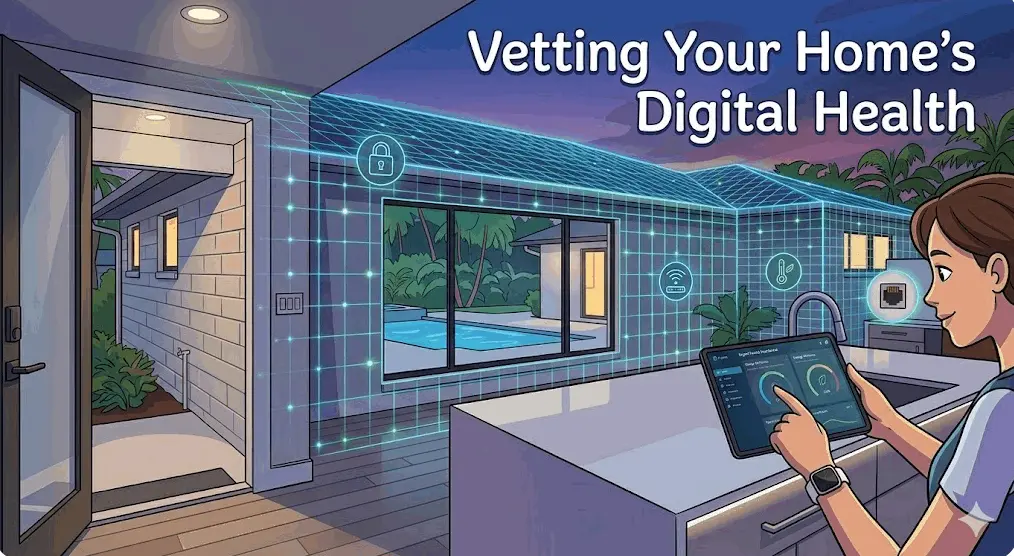
In the world of Central Florida real estate, we’ve always had a standard checklist: Check the roof for hurricane readiness, ensure the AC is blowing cold against the 95-degree heat, and make sure the kitchen finishes are up to date. But as we move further into 2026, a new pillar of property value has emerged—one that is invisible to the naked eye but critical to modern living.
Welcome to the era of Digital Health.
When you buy a home today, you aren't just buying four walls and a roof; you are buying a complex, interconnected tech ecosystem. A home with poor "digital health" can lead to thousands of dollars in hidden costs, compromised privacy, and the modern nightmare of a "dumb" smart home.
Here is how to look beyond the quartz countertops and vet the digital heartbeat of your next investment.
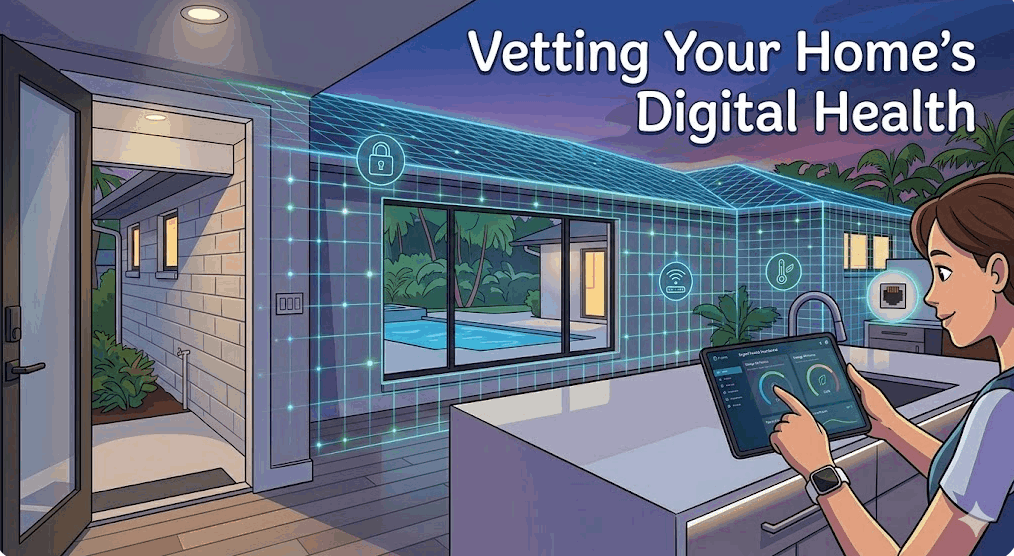
1. The Backbone: Connectivity and Infrastructure
A home’s digital health starts behind the drywall. In 2026, a "connected home" is no longer just about having a strong Wi-Fi signal; it’s about the physical infrastructure that supports high-bandwidth living.
What to Look For:
-
The "Hub" Location: Does the home have a dedicated media closet or structured wiring panel? In modern Florida builds, we look for a central point where all Cat6 or Cat7 ethernet cables terminate.
-
Wired vs. Wireless: Even with Wi-Fi 7 becoming the standard, "Digital Health" relies on hardwired backbones for high-demand devices like 8K security cameras and home office setups.
-
Cellular Dead Zones: Central Florida’s concrete-block construction (common for hurricane safety) is notorious for killing cell signals.
The Fact: According to recent 2026 PropTech surveys, homes with "certified digital readiness"—meaning documented high-speed hardwiring and optimized mesh network layouts—see a 3% to 5% premium in resale value compared to tech-lagging neighbors.
2. The Smart Home "Ghost in the Machine"
One of the biggest risks for buyers today is "inherited technology." If the previous owner installed a DIY hodgepodge of smart switches, thermostats, and locks, you might be inheriting a security risk and a massive headache.
Vetting the Ecosystem:
-
Matter & Thread Compatibility: Is the home built on the Matter protocol? Matter is the universal language for smart homes that allows Apple, Google, and Amazon devices to talk to each other. A home using older, proprietary "walled garden" tech is a home that will be obsolete by 2030.
-
Device Ownership Transfer: This is a major hurdle in 2026 closings. You must ensure the seller provides a "Digital Handover Document." This includes a list of all IP-connected devices and proof that accounts have been "factory reset."
The "Zombie Tech" Risk
"Zombie tech" refers to smart devices that are no longer supported by the manufacturer. If the home’s smart irrigation system or "smart" windows rely on a company that went bankrupt in 2024, those features are now just broken hardware.
3. Cyber-Sewer and Data Privacy
Just as you would inspect a septic tank, you must inspect the "data hygiene" of a property. A home’s digital health includes the security of its perimeter.
The Audit Checklist:
-
Security Camera Placement: Are there "blind spots," or conversely, are cameras positioned in ways that violate privacy laws?
-
Network Segmentation: Does the home’s router support a "Guest" and "IoT" network? This keeps your smart fridge from being a backdoor for hackers to access your bank accounts on your laptop.
-
Biometric Reliability: We are seeing more homes in Central Florida with biometric (fingerprint or facial) entry. Test these during the walkthrough. If they fail in the Florida humidity, they are a liability, not an asset.
4. Energy Intelligence: The New ROI
In the Sunshine State, digital health is inextricably linked to energy health. A "healthy" digital home uses AI to fight the Florida electric bill.
Examples of Digital Energy Health:
-
Predictive HVAC: Look for systems like the latest Ecobee or Nest models that don't just follow a schedule but use AI to predict "heat soak" in your West-facing rooms and pre-cool the house before the afternoon spike.
-
Solar & Storage Monitoring: If the home has solar panels, the "health" is found in the software. Can you see real-time degradation? Does the battery backup (like a Tesla Powerwall 3) communicate with the grid to sell back power during peak times?
5. The "Digital Inspection": A New Standard
As an investor, I recommend adding a "Digital Audit" to your traditional home inspection.
What the Audit Covers:
In 2026, the "pretty kitchen" is the baseline. The real value—the "Digital Health"—is what ensures a home is efficient, secure, and future-proof.
When we walk through a property together, I won't just be looking at the crown molding. I’ll be looking for the Cat7 ports, the Matter-compatible hubs, and the strength of the fiber-optic drop. Because in this market, a home that isn't digitally healthy is a home that’s already falling behind.
Categories
Recent Posts





ARE YOU LOOKIING TO SELL YOUR HOME FOR TOP DOLLAR? CLICK THE BUTTON BELOW TO GET STARTED
SELL YOUR HOME