
Short-Term Rentals in Central Florida: What’s Legal in 2026?
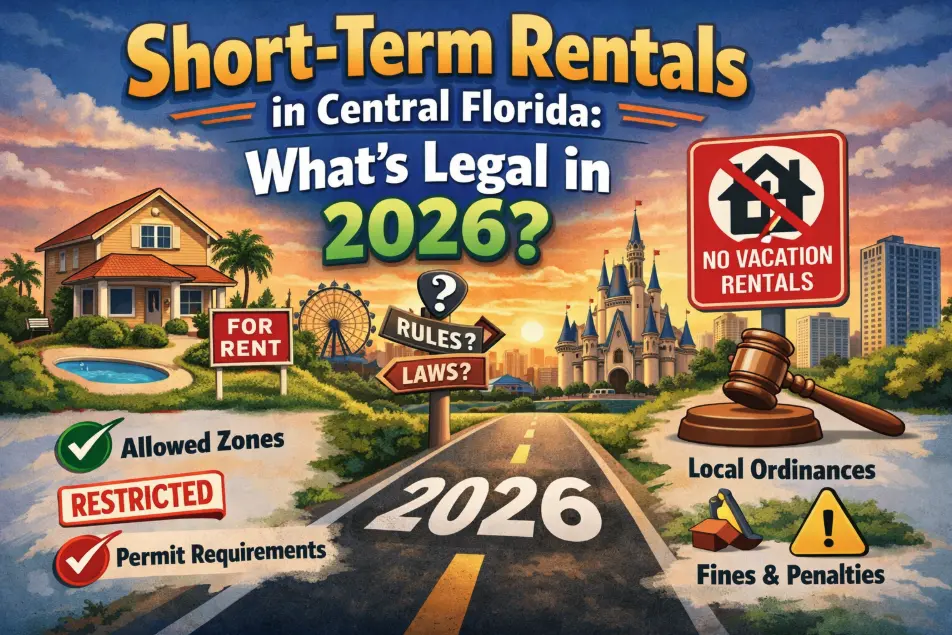
Short-term rentals (STRs) like Airbnb and VRBO remain a major attraction for real estate investors in Central Florida — especially given the region’s tourism boom, year-round sunshine, and consistent tenant demand. However, not all properties or cities treat short-term rentals the same way, and rules continue to evolve in 2026.
If you’re considering investing in a short-term rental or converting an existing property to STR use, understanding the legal landscape is essential. This blog breaks down what’s legal, what’s restricted, and what investors should watch in Central Florida.
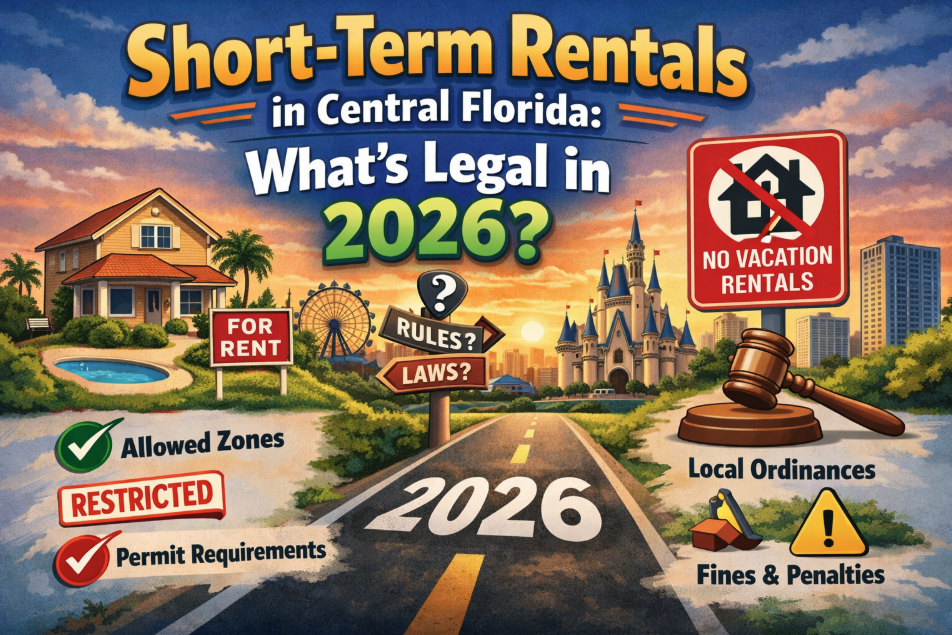
📊 Why Short-Term Rentals Are a Big Deal in Central Florida
Before diving into specific cities, it’s worth understanding why STRs are so popular here:
- Tourism demand: Central Florida hosts millions of visitors annually thanks to theme parks, beaches, and entertainment hubs. This fuels strong occupancy potential.
- Seasonal flexibility: With mild winters, Central Florida draws snowbirds and vacationers for much of the year.
- Investor diversification: Investors use STRs for higher rent income compared to traditional long-term leasing — when done legally.
However, profitability depends on compliance with local rules and regulations.
🏙️ What “Short-Term Rental” Means Legally
Most cities define a short-term rental as a residential property rented for fewer than 30 consecutive days. However, this definition may vary by city and homeowners association (HOA).
Typical requirements often include:
✔ Business license or STR permit
✔ Tourist development tax registration
✔ Proof of insurance
✔ Safety inspections
Failing to comply can result in fines, listing takedowns, or legal action.
📍 Short-Term Rental Rules by Central Florida City
Here’s a breakdown of what you need to know in key Central Florida markets in 2026:
🏡 1. Orlando
Orlando permits short-term rentals in most residential zones, but there are important requirements:
Legal Requirements:
- City business tax receipt (STR license)
- Tourist Development Tax (TDT) registration
- Compliance with safety codes (smoke detectors, egress windows, etc.)
- Some neighborhoods may have additional zoning requirements
💡 Example: Orlando’s STR regulations were updated to ensure properties are safe and meet neighborhood standards — investors must include a local contact person for compliance.
🏖️ 2. Kissimmee
Kissimmee is a strong STR market due to proximity to theme parks, but it has robust rules:
Key Requirements:
- STR registration with the city
- Tourist Development Tax
- Compliance with city safety and occupancy standards
- Some neighborhoods and HOAs restrict rentals under a certain night minimum
💡 Investor Tip: Some Kissimmee subdivisions only allow rentals of 7 nights or more — shorter stays require special approval or may not be permitted.
🌴 3. Davenport
Davenport is popular with vacation investors and generally permits short-term rentals, but investors should check:
Important considerations:
- County registration may be required
- Some subdivisions within the city enforce HOA restrictions
- Properties near conservation or sensitive areas may have added rules
💡 Example: A vacation home near Davenport Ridge may technically meet city STR rules but could be barred by the HOA from nightly Airbnb rentals.
🏘️ 4. Clermont
Clermont does allow short-term rentals, but like other cities, it requires proper permitting and adherence to safety standards.
Must-do checklist:
- Local STR registration
- Tourist tax compliance
- Respect occupancy limits
- Follow HOA rules if applicable
💡 Investor tip: Clermont’s appeal to families often means longer stays (weekly or monthly), which can be more stable rental income.
🏘️ 5. Winter Garden
Winter Garden’s historic neighborhoods and walkable downtown make it appealing to STR guests — but rules are stricter than some nearby cities.
Legal Landscape:
- City registration required
- Some historic districts may restrict short-term rentals
- Tourist tax, inspections, and business license needed
💡 Example: A charming bungalow in Winter Garden’s historic district might need a conditional use permit — even with general city STR approval.
📍 6. Lakeland
Lakeland generally permits short-term rentals but has clear expectations:
Requirements:
- Registration or license
- Tourist Development Tax
- Safety requirements (alarms, signage, etc.)
- Some neighborhoods may impose HOA restrictions
💡 Investor Tip: Lakeland’s lower entry prices and growing workforce population make it ideal for extended-stay rentals or hybrid STR/LTR models.
🧠 Common Legal Pitfalls Investors Must Avoid
❌ 1. Ignoring HOA Rules
Even if a city allows short-term rentals, HOAs often have stricter rules. Some completely ban rentals under 30 days.
Example:
A 4-bedroom home in a Kissimmee development might meet city law but still be prohibited from Airbnb use by its HOA.
❌ 2. Skipping Tourist Tax Registration
Central Florida cities require owners to collect and remit tourist development taxes on short-term stays.
Failing to register means:
- Fines
- Back taxes owed
- Potential legal trouble
❌ 3. Miscounting Nights
Some cities require a minimum stay (e.g., 7 nights) or have saturation limits for how many nights per year a property can rent.
Investors must understand:
- Minimum stay requirements
- Maximum occupancy limits
- Seasonal restrictions
❌ 4. Not Maintaining Safety Standards
Short-term rentals must meet safety standards such as:
✔ Fire extinguishers
✔ Egress windows
✔ Operational smoke and CO detectors
✔ Posted emergency information
Failing an inspection can delay bookings or lead to penalties.
🧾 Required Permits and Taxes
Here’s a quick checklist most Central Florida cities enforce:
🔹 Business/STR License — Required in most cities
🔹 Tourist Development Tax (TDT) — Mandatory on short stays
🔹 Occupancy/Building Safety Compliance
🔹 Fire and life-safety inspections (sometimes)
🔹 Local contact person required in some jurisdictions
Missing any of these can lead to suspension of your STR status or fines.
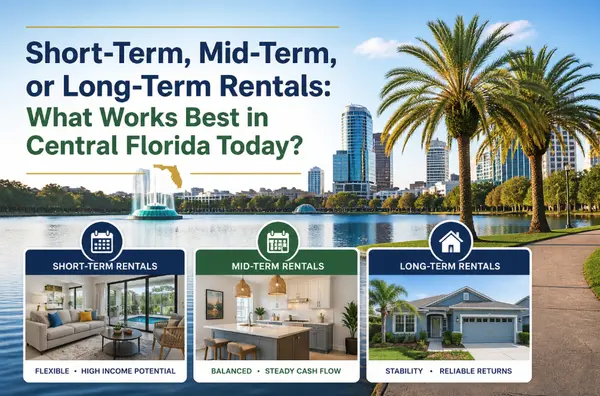
🏡 Short-Term vs. Long-Term Investment: Which Is Better?
Both strategies can work in Central Florida, but legal compliance is easier with long-term rentals.
Short-Term Benefits:
- Higher gross rent potential
- Peak seasonal income
- Flexibility in personal use
Short-Term Challenges:
- Regulation compliance
- Tourist tax remittance
- HOA and city restrictions
- Higher management demands
Long-Term Benefits:
- Predictable income
- Simpler legal rules
- Lower turnover and management needs
📌 Investor Best Practices in 2026
Whether you’re new to STR investing or scaling up your portfolio, keep these tips in mind:
✅ 1. Always Check Municipal Code Before Buying
Before submitting an offer, verify:
- City STR rules
- Subdivision HOA regulations
- Rental zoning classifications
Many investors lose money because they assumed a property was STR-compatible — only to find out later it isn’t.
✅ 2. Factor Taxes and Fees Into Your Pro Forma
Short-term rentals often carry:
- Higher insurance costs
- Tourist tax obligations
- Permitting fees
- Professional management fees
Including these in your financial model prevents surprises.
✅ 3. Keep Documentation Updated
Cities may audit STR owners. Make sure:
- Permits are current
- Tourist tax filings are submitted
- Safety inspections are documented
✅ 4. Consider Professional Management
Managing bookings, guest communication, cleaning, and compliance across multiple cities can be time-consuming.
A professional can help:
- Maximize occupancy
- Maintain regulatory compliance
- Handle guest issues
🏁 Final Thoughts
Central Florida remains one of the most dynamic short-term rental markets in the U.S., but legal compliance in 2026 is more important than ever.
Understanding local regulations, HOA restrictions, tax requirements, and safety standards is essential for profitability. With the right strategy and due diligence, short-term rentals can be a lucrative part of your investment portfolio — but only if you play by the rules.
Categories
Recent Posts






ARE YOU LOOKIING TO SELL YOUR HOME FOR TOP DOLLAR? CLICK THE BUTTON BELOW TO GET STARTED
SELL YOUR HOME