
Vacation Home vs Primary Residence in Central Florida: Which One Is Right for You?
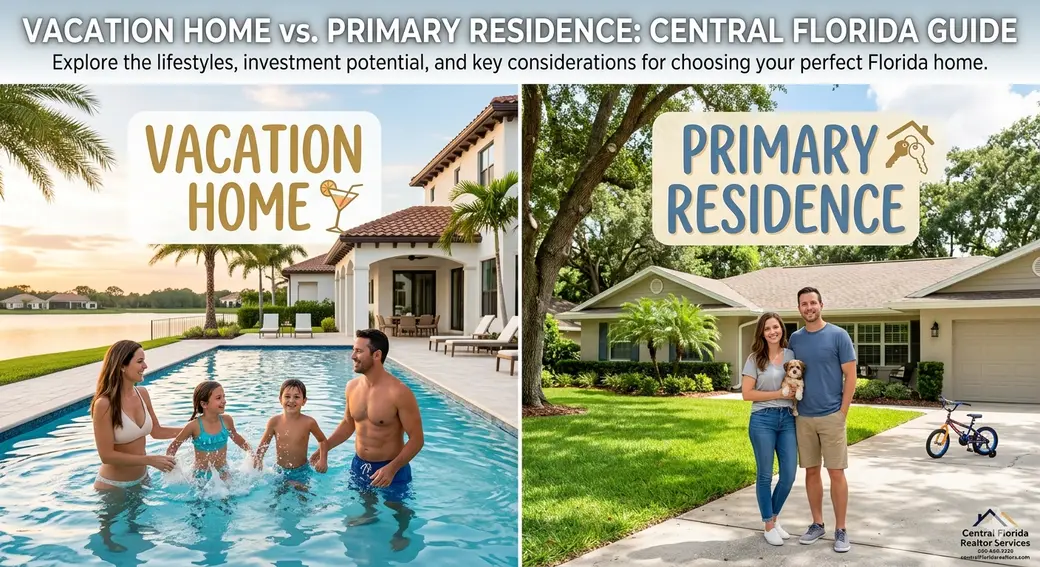
Central Florida continues to attract buyers from across the U.S. and abroad. Some are looking for a full-time place to live, while others dream of owning a vacation home they can enjoy part-time and potentially rent out.
But choosing between a vacation home and a primary residence in Central Florida is not just about lifestyle—it affects financing, taxes, insurance, rental rules, and long-term financial outcomes.
If you’re deciding which path makes the most sense, this guide breaks down the key differences, pros and cons, and real-world scenarios to help you make a smart, informed decision.
Understanding the Difference: Vacation Home vs Primary Residence
Before comparing benefits, it’s important to clarify how lenders, insurers, and local governments define these two property types.
Primary Residence
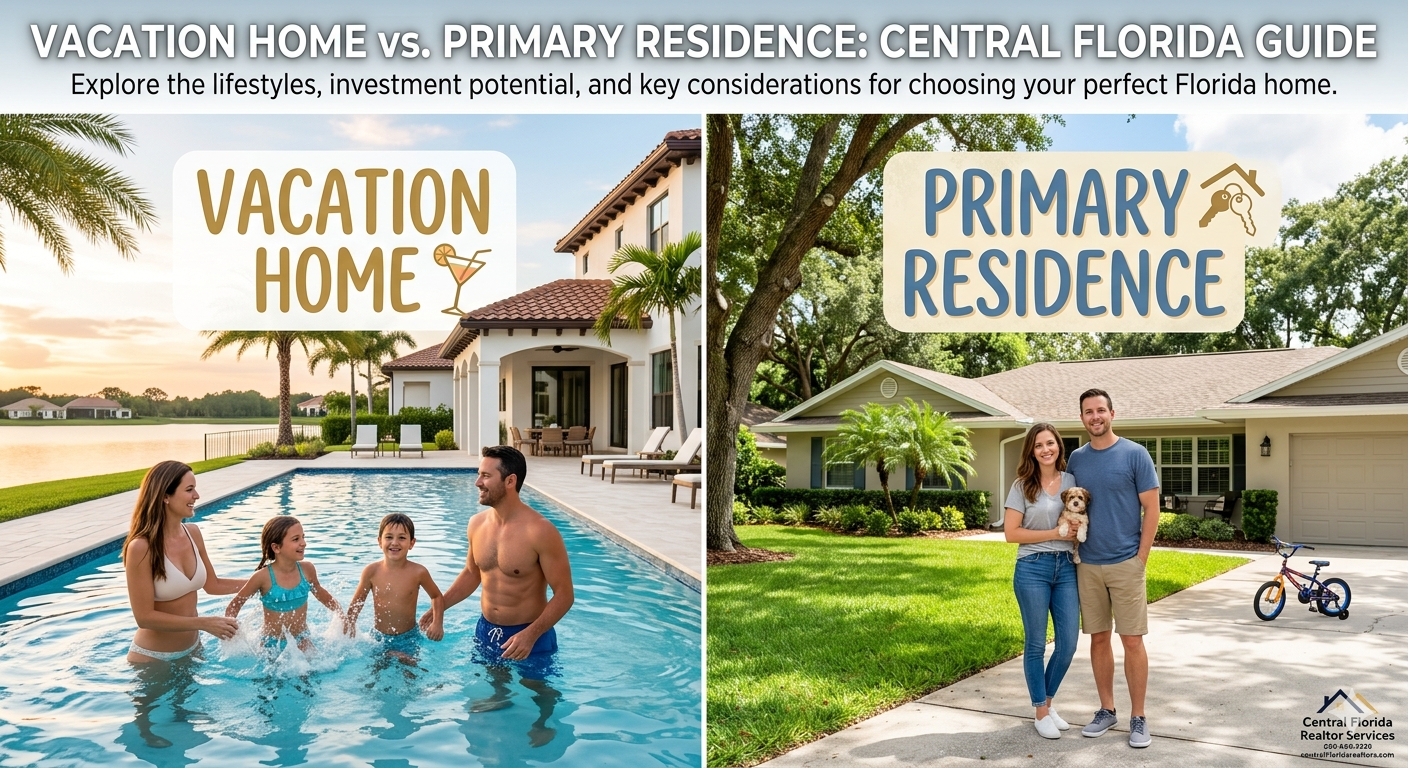
A primary residence is the home you live in most of the year. It is your legal address and where you’re registered for taxes, voting, and driver’s license purposes.
Vacation Home
A vacation home (also called a second home) is a property you occupy part-time and do not use as your main residence. Some owners rent it out short-term or seasonally, depending on local laws and HOA rules.
These definitions matter because they directly impact costs, rules, and eligibility for benefits.
Why Central Florida Appeals to Both Buyers
Central Florida offers a unique mix of lifestyle and investment potential, making it attractive for both full-time residents and vacation homeowners.
Popular areas include Orlando for employment and entertainment, Kissimmee and Davenport for vacation rentals, and Clermont or Winter Garden for family-friendly living.
Because demand is strong in both categories, buyers must choose the option that aligns best with their goals.
Financing Differences You Need to Know
One of the biggest distinctions between a vacation home and a primary residence is financing.
Primary Residence Financing
Primary homes typically qualify for:
- Lower interest rates
- Lower down payment requirements (as low as 3–5%)
- FHA, VA, and USDA loan options
- Better overall loan terms
Because lenders view owner-occupied homes as lower risk, buyers benefit from more favorable financing.
Vacation Home Financing
Vacation homes usually require:
- Higher down payments (often 10–20%)
- Slightly higher interest rates
- Stronger credit and reserves
- Conventional loans only in most cases
If the home will be rented out frequently, lenders may classify it as an investment property, which comes with even stricter requirements.
Taxes and Financial Benefits
Primary Residence Tax Advantages
Primary residences in Florida may qualify for:
- Homestead Exemption, which reduces taxable value
- Property tax caps that limit annual increases
- Capital gains tax exclusions when selling (under certain conditions)
These benefits can save homeowners thousands of dollars over time.
Vacation Home Tax Considerations
Vacation homes:
- Do not qualify for homestead exemptions
- May face higher property taxes
- Require reporting rental income if rented out
- May allow certain tax deductions for rental-related expenses
For investors, tax benefits can still exist—but they require careful planning and professional advice.
Insurance Costs and Coverage Differences
Insurance is another area where costs vary significantly.
Primary Residence Insurance
- Lower premiums
- Standard homeowners policies
- Easier coverage approval
Vacation Home Insurance
- Higher premiums
- Often classified as secondary or rental property insurance
- Additional coverage needed for short-term rentals
- Stricter underwriting requirements
In Central Florida, insurance costs can also be influenced by:
- Roof age
- Wind mitigation features
- Flood zones
- Proximity to coastlines or storm-prone areas
Rental Rules and Restrictions
This is where many buyers get caught off guard.
Primary Residence Rental Flexibility
Primary residences typically allow:
- Long-term rentals
- Occasional short-term rentals (depending on city rules)
- Fewer HOA restrictions
However, zoning and HOA rules still apply.
Vacation Home Rental Restrictions
Vacation homes—especially those used for short-term rentals—are subject to:
- City and county regulations
- Licensing and permit requirements
- Tourist development taxes
- HOA rental restrictions
Important:
Even if a city allows short-term rentals, an HOA can still prohibit them entirely.
Failing to verify rental rules before buying is one of the most expensive mistakes buyers make.
Lifestyle Considerations
Living Full-Time in Central Florida
Primary residence buyers often value:
- Commute times
- School districts
- Healthcare access
- Community amenities
- Long-term neighborhood stability
Cities like Clermont and Winter Garden appeal to families and professionals looking for long-term comfort and appreciation.
Owning a Vacation Home
Vacation home buyers prioritize:
- Proximity to attractions
- Rental income potential
- Flexibility for personal use
- Ease of property management
Areas near theme parks and resort-style communities often perform best for this strategy.
Appreciation vs Income: What’s Your Goal?
Primary Residence Focus
- Long-term appreciation
- Stable ownership costs
- Lifestyle benefits
- Lower risk
Primary residences are often about wealth preservation and gradual growth.
Vacation Home Focus
- Rental income potential
- Seasonal cash flow
- Personal enjoyment
- Higher risk, higher reward
Vacation homes can generate income—but they also involve more management, regulation, and variability..
Common Buyer Mistakes to Avoid
❌ Assuming a vacation home will automatically cash flow
❌ Not checking HOA rental restrictions
❌ Underestimating insurance and maintenance costs
❌ Choosing a property based only on emotion
❌ Failing to align the purchase with long-term goals
A clear strategy upfront prevents regret later.
Which Option Is Right for You?
A primary residence may be right if you:
- Plan to live in Central Florida full-time
- Want lower financing costs
- Value tax benefits and stability
- Prefer predictable expenses
A vacation home may be right if you:
- Live elsewhere most of the year
- Want rental income potential
- Understand local rental laws
- Are comfortable with higher costs and management
Some buyers even start with one and transition to the other over time.
Final Thoughts: Strategy Matters More Than the Property Type
Both vacation homes and primary residences can be excellent purchases in Central Florida—but only when they align with your financial goals, lifestyle, and risk tolerance.
The smartest buyers don’t just ask “Which home do I like?”
They ask “Which option makes the most sense for me long-term?”
Categories
Recent Posts






ARE YOU LOOKIING TO SELL YOUR HOME FOR TOP DOLLAR? CLICK THE BUTTON BELOW TO GET STARTED
SELL YOUR HOME